

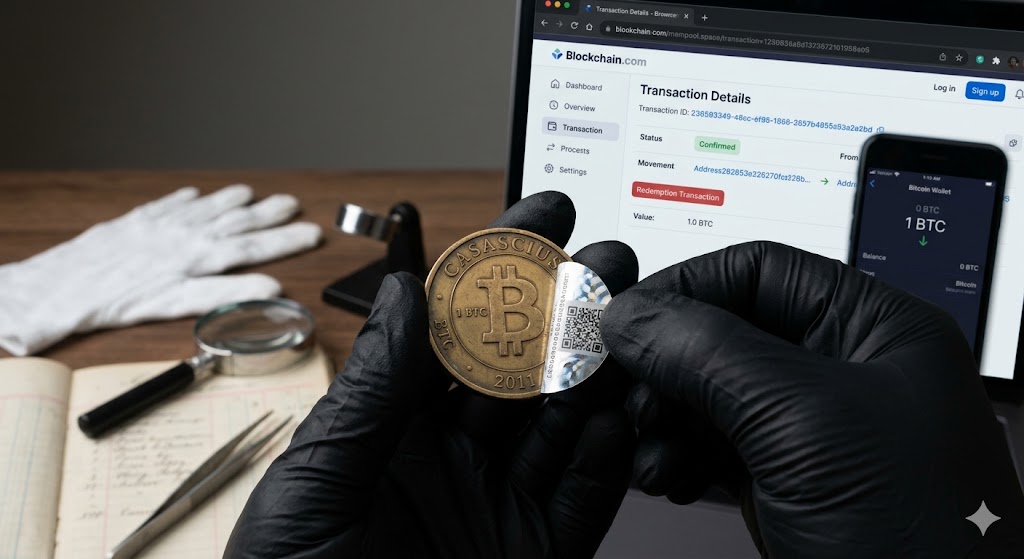
A rare physical bitcoin worth $1.78 million has moved on-chain for the first time since 2013 after its owner peeled the holographic seal to redeem the underlying digital asset. The transaction marks another reduction in the dwindling pool of unspent Casascius coins that served as novelties during bitcoin’s early era, when physical representation helped skeptical newcomers bridge the conceptual gap between cash and cryptographic money.
Casascius Coin Dynamics
The redeemed specimen belongs to the Casascius series minted by Utah-based software engineer Mike Caldwell beginning in 2011. Each unit contained a cryptographic private key sealed beneath a tamper-evident holographic sticker, with denominations ranging from 1 BTC to 1,000 BTC. Caldwell suspended sales in late 2013 after receiving regulatory attention from the U.S. Treasury’s Financial Crimes Enforcement Network, ensuring that surviving unpeeled coins would remain finite relics of a pre-regulatory era. Collectors have since developed grading standards for the remaining stock, with uncirculated specimens commanding the steepest premiums at specialist auctions.
The coin redeemed this week carried an approximate 17 to 25 BTC load, depending on the timing used by appraisers to calculate the $1.78 million notional valuation. Before the owner scratched the hologram to sweep funds into a digital wallet, the object held value beyond its metal content. Intact Casascius pieces trade in niche secondary markets where numismatic premiums frequently exceed the embedded bitcoin’s spot price. Once peeled, the casing becomes a hollow souvenir and the digital tokens enter circulation like bitcoin moved from any standard cold-storage device. Blockchain analytics first flagged the activation of an address associated with early-series Casascius funding, confirming the redemption within hours of the sweep transaction confirming on the base layer.
Market Analysis
Twelve years of dormancy implies the holder either acquired the coin as a long-term store of value or simply misplaced the physical piece until recently. In either scenario, the decision to strip the hologram now rather than during previous bull markets suggests a calculated shift in how the owner weighs illiquid collectibles against immediately spendable satoshis.
Physical bitcoins once solved a practical problem: transferring value without internet access or technical fluency. That utility has faded as regulated custodians, hardware wallets, and exchange-traded funds offer simpler avenues for traditional investors. Caldwell’s brass tokens survive largely as historical artifacts, and each redemption further thins the population available to museums and numismatists who view the series as foundational crypto memorabilia.
The event also illustrates a subtle supply dynamic. While 21 million bitcoin represents the protocol cap, the number of coins genuinely irretrievable or physically locked in collectible formats effectively removes units from day-to-day market depth. Redeeming a Casascius piece returns those satoshis to active supply, though a single transaction is negligible against daily global volume. The redemption also reminds observers that bitcoin’s supply cap does not distinguish between lost keys and deliberately vaulted coins; both exit circulation until someone sweeps the balance. Similar redemptions during past bull cycles have occasionally preceded localized price peaks, though assigning causal weight to single-wallet movements remains analytically weak. For the broader market, the more relevant signal is psychological: even the most steadfast early holders occasionally choose liquidity over legacy, especially when prices reach levels that justify abandoning numismatic scarcity.
What to watch
– Remaining unpeeled Casascius balances tracked by blockchain analytics monitors
– Premium spreads between intact physical bitcoins and spot BTC on specialist auction platforms
—
Frequently Asked Questions
What is a Casascius coin?
A physical metal coin created by Mike Caldwell that holds a bitcoin private key beneath a tamper-evident hologram, allowing whoever possesses it to redeem the embedded digital value.
Why would someone redeem a physical bitcoin after 12 years?
Owners typically redeem when the underlying bitcoin value materially exceeds the collectible premium, or when secure custody solutions and liquidity needs outweigh the benefits of holding the physical artifact.
Are unpeeled physical bitcoins more valuable than the bitcoin they contain?
Yes, intact specimens frequently command numismatic premiums well above spot bitcoin prices in collector markets. Once peeled, the casing loses that premium and retains only novelty or melt value.
Disclaimer: This article is for informational purposes only and does not constitute financial advice. Cryptocurrency investments carry significant risk. Always conduct your own research before making investment decisions.